I want to share with you how I took the lessons I learned in Malaysia and incorporated them into my classroom plans. My hope is that you may see an idea here that can be taught in your classroom with your students. In this first edition, I am excited to share with you how you can revitalize well-worn lessons by adapting a Malaysian street food classic or utilizing cake decorating as inspiration to keep students yearning to learn.
In Malaysia, I discovered a new dish - roti canai - that I realized could cover multiple competencies and also challenge students’ palates. Roti canai is a lovely and flaky flatbread served both in sweet and savory applications. It is traditionally offered with a side of chicken curry sauce. The dough for the flatbread is made a day in advance. (I see my classes every other day and I can attest that the dough is fine after two days. It is well-rested and can be stretched super thin.)
Making roti canai was a delightful opportunity to show off the power of gluten. It was folded over itself and griddled. To add an extra layer to the lesson, I also showed my students how some Malaysians put the unfolded flatbread on the griddle, cracked an egg on top, spread it around, then folded the dough over the egg. Just as with the bread, you can teach about gluten development, griddling and egg cookery.
Then, I added to the lesson by including the curry gravy. This preparation covers knife cuts, sautéing, simmering, sauce preparation, spice identification and many other skillsets. In my opinion, roti canai with curry gravy is a relatively approachable dish to the American palate, so many students will inherently enjoy this dish and hopefully want to learn more about Malaysian cuisine.
I also learned about the revitalization of student lessons by teaching teachers about my travel experiences. I was asked to do a professional development class for the inaugural lesson in a series my school calls “Teachers Teaching Teachers.” In these PD sessions, one teacher leads a short lesson and the other teachers are students in our class. This gives everyone a chance to both observe a colleague and feel what it feels like to be a student again. Being that it was the first of its kind, I was excited (and nervous) to set the bar. I was coming home excited from Malaysia and wanted to incorporate something from that trip.
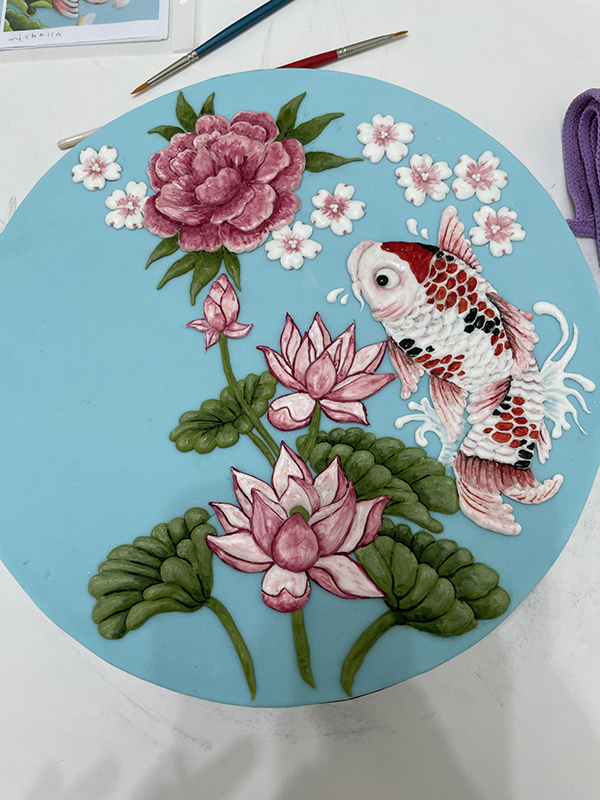 I was immediately drawn to sharing my experience of taking a private master class with one of the best royal icing experts in the world, Kelvin Chua of Vinisim Sugar Art. This made me want to teach my pre-existing royal icing lesson to my colleagues, but of course, I wanted to beef it up with what I had learned with Kelvin.
Because I had just gotten more in-depth knowledge from Kelvin AND I was teaching my colleagues, I took a deep dive into preparing this lesson. Having said that, I only had 45 minutes with my teachers and there was no way I could get to show them the highly advanced skills Kelvin had shown me.
That’s when I realized something important about teaching my students: Students can’t master advanced skills on the first day. And, for my secondary program, some will not gain them by the time they graduate. However, it’s about teaching as much as I can and then inspiring them to want to continue to learn.
This became the focus of my professional development: teaching basics and inspiring students to be lifelong learners. I showed my colleagues basic techniques such as how to fill a pipette, how to hold it, and how to pipe over a stenciled line. I asked them to draw a new, simple shape on their template sheet and practice filling it in. I ended the session with a conversation about what can be done with royal icing and showed them the work I had completed with Kelvin. This illustrated for them what was possible if they were to improve. Admittedly, most of my teachers don’t have a lot of interest in pastry, so most will never touch it again. But when I taught this newly upgraded lesson with my students, I had a new hook for them. One student was so inspired that they asked to take the piping bag and royal icing home to practice. I call that a win!