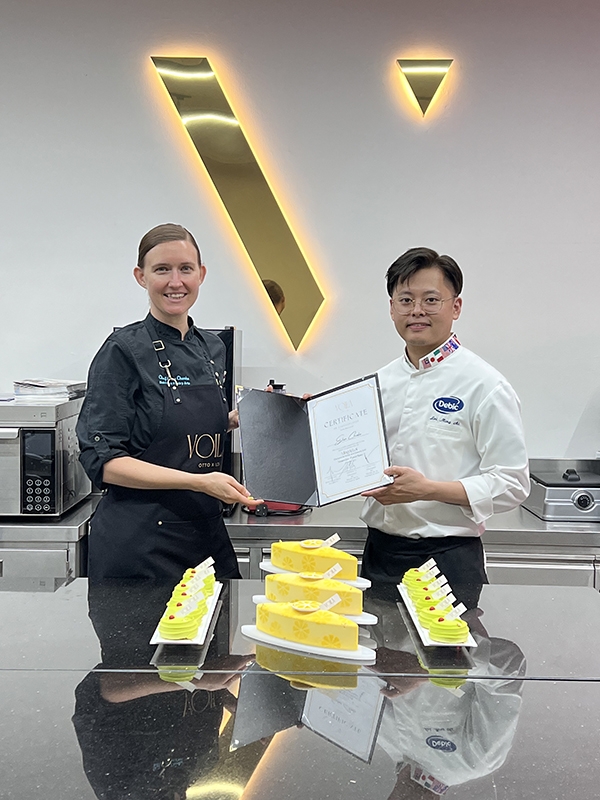
 While in Malaysia, I took a private master class with Chef Loi Ming Ai, who won gold as part of the 2019 Pastry World Cup Team. He, and one of his championship teammates, own a pastry shop called Viola Patisserie in the capital, Kuala Lumpur. Working one-on-one with Chef Loi was an amazing experience and one so complex I am still digesting to be able to utilize with my students. But outside of the hands-on lesson, I learned so much from observing his presentation practices. Malaysian pastry chefs are not just thoughtful about their flavors, textures, and techniques, but the absolute perfection of their presentation and packaging of their high-end desserts is stunning.
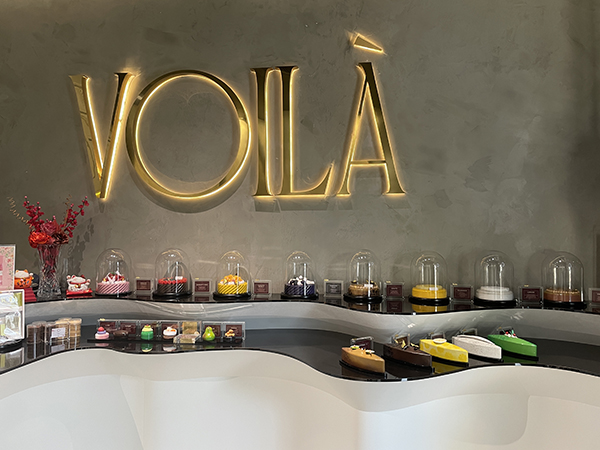
When you walk into their shop, you are welcomed into a space that is modern industrial yet artistically playful. Because of the monochromatic backdrop, your eyes are immediately drawn to the vibrant colors of items for sale, which are covered by glass cloches. However, what is underneath is not real sweets, but plastic renderings of their menu items. It is a common practice used throughout Asia to display expensive food renderings instead of the real item. This allows a shop to always display the items they have for sale and the items never go bad. In the US, if you have a bakery case filled with fresh fruit tarts that didn’t sell on day one, they typically look worse-for-the-wear on day two and so on. With these plastic casts, customers can get the same visual representation of what they are ordering without sacrificing quality. Each item ordered is finished and kept to its high standard.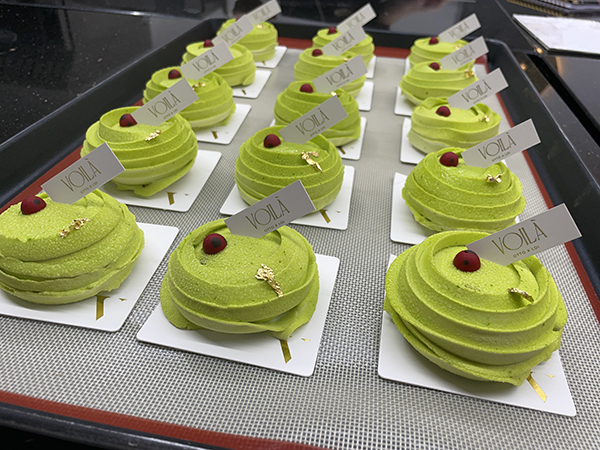
Packaging was next level in Malaysia. High-end shops in Malaysia put small, branded cardstock tags into every item that goes out the door. In the U.S., we put our branding on the box, but by the time the item is on the table, the baker is unknown. Malaysians have a clever way to make sure everyone who is enjoying their products knows where to buy it again. If we were to try this in the U.S., there may be a learning curve with teaching customers that the card is not edible. But, if you want to make it edible and bougie, you could always custom order chocolate decor with your logo. I love sharing this marketing hack with students who may one day open their own establishment and will want to stand out from their competitors.
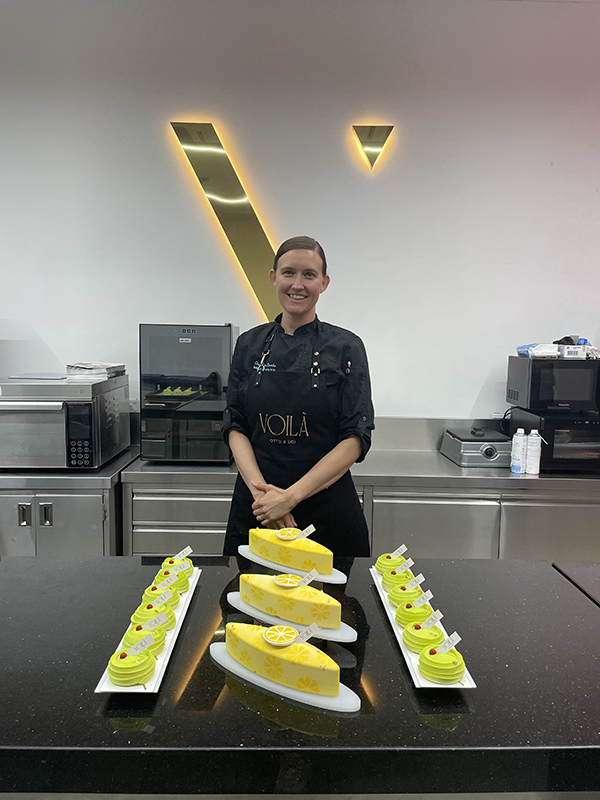 When I received the items I purchased from Viola Patisserie, they took so many steps to make sure they got to their destination in the intended state. First, I was given a branded cooler bag. Inside the bag, each item was carefully boxed, with double stick tape under the single serve boards, so the sweets didn’t slip as I walked with the bag. The boxes even came with a thin drawer on the bottom, where they were able to slip in a thin disposable ice pack to ensure the petit gateaux and entremets would endure the Malaysian summer heat. Who doesn't love an unboxing video these days? I can see American food influencers now unboxing local treats for their audiences, showing off the gorgeous and highly practical packaging. All the attention to detail crafted by the Malaysian bakers leaves an impression on a customer.
I also took a private master class with one of the best royal icing experts in the world, Kelvin Chua of Vinisim Sugar Art. I learned some highly advanced skills from Kelvin. I incorporated my new skills in an updated lesson with my students and they loved it. One student even asked to take home pipettes and royal icing to practice at home. If with one lesson I can inspire even one student to continue to grow a particular skill on their own time, I will take that as a win.
By working with world-class Malaysian experts, I was inspired to improve not only my technical skills but also my teaching skills. From how to create the perfect package experience to how to coach students to want to continue to learn a skill we have only dipped our toes into, my classroom has been greatly improved thanks to my time abroad. I hope that my story inspires you to continue to push the limits of your students, your colleagues, and yourself.
In the next article, I will share lessons about my experience in Japan from street food to high-end pastry shops.