
The Culinary Institute of America Appoints VP of Strategy
Thursday, 26 March 2015 03:00
 The Culinary Institute of America has appointed Rose S. Wang as the college’s vice president of strategy. Wang joined the college on Feb. 3, 2015, after serving as the chief financial officer of the Mount Sinai School of Medicine’s Center to Advance Palliative Care in New York City since 2013.
Before taking her position at Mount Sinai, she was managing director of Carat Companies, a Princeton, N.J.-based consulting firm to nonprofit organizations, and division CFO of beverages for the Campbell Soup Company in Camden, N.J. Prior to that she held several financial and strategic planning positions with Avon Products, Inc., and Citibank N.A., including executive director of business planning, director of international finance and operations, and director of finance and corporate development.
 Maple Leaf Farms challenges professional chefs and culinary students to think outside the box when it comes to duck preparation. And to spark their creative juices, Maple Leaf is offering more than $19,000 in prize money in the 2015 Discover Duck Recipe Contest.
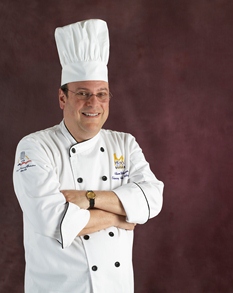 On a recent trip to Hawaii, Chef Weiner had an epiphany: Teaching our students how to cook isn’t good enough. To better prepare them for the real world, we also need to introduce students to the different formats of serving. Here are 10 effective ideas that fit nicely within a shorter class timeframe.
 Familiarity with cooking and incorporating lentils into various menu applications can help your students meet nutrition regulations, budgets and consumer demands when they become foodservice professionals.
 Emily Williams Knight—the newest of three educators on the NRAEF’s board—is committed to helping more Americans achieve meaningful, fulfilling careers in the restaurant industry via a respected national industry platform.
 Here’s a valuable education-resources fact sheet to help educators effectively teach seafood sustainability.
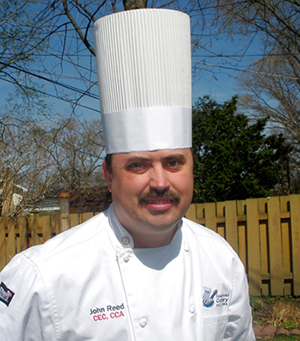 Naturally, educators must stress to their students the critical importance of proper knife skills. But, says this chef-consultant, the reality in the workplace doesn’t always match what we teach. (Don’t miss the YouTube video link.)
 Many students are not used to conducing structured observations and might not know what to look for and how often to record behaviors. The more explicit you are about how they should conduct the observation, the more likely it will be an effective learning experience.