
Foodservice Educators Win Big at Culinary World Cup 2014
Wednesday, 10 December 2014 03:00
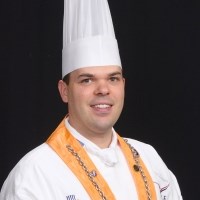 AI Pittsburgh instructor Culp helped Culinary Team USA place third overall in Luxembourg, while U.S. chef-educators in individual competition represented their nation well.
Shawn Culp, CEC, department chair of culinary arts, baking/pastry and HRM at The Art Institute of Pittsburgh, Bridgeville, Pa., was part of the outstanding performance of ACF Culinary Team USA at the 12th-annual Villeroy & Boch Culinary World Cup 2014 in Luxembourg, Nov. 22-26. Garnering two gold medals and the highest score in the cold-food competition, the ACF team representing the United States placed third overall in one of the largest international culinary competitions in the world.
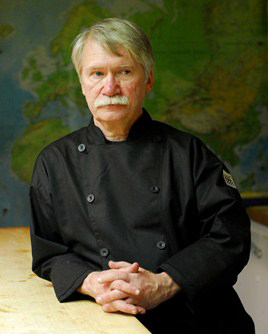
Culp (pictured) and five other chefs comprising ACF Culinary Team USA competed in the hot-food kitchen Nov. 22, where they prepared a three-course dinner for 110 people in six hours. On Nov. 25, the team competed in the cold-food portion of the competition, where they presented finger foods, a cold buffet platter, starters, a three-course vegetarian menu and a pastry-arts menu and showpiece.
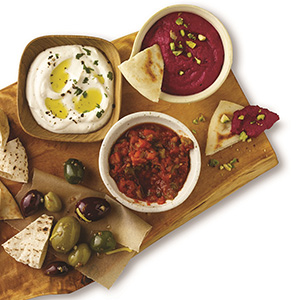 15th-annual report highlights top tastes driving the future of flavor and menu innovation.
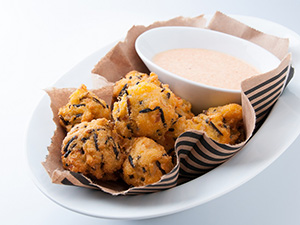 The annual menu-trends survey of chefs conducted by the National Restaurant Association discovered that culinary cocktails, doughnuts and brown rice are gaining in popularity among customers, while kale salads, housemade sodas and hybrid desserts are cooling down.
 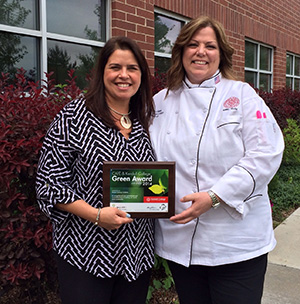 For a seventh year, Kendall College will sponsor the CAFÉ/Kendall College Green Award, the industry’s premiere program lauding successes of culinary-arts and hospitality-management programs that practice and train students in ecological responsibility.
 A primer on baking with apples, from someone who should know (or at least knows whom to ask).
 In his final installment in a series on student assessment, Dr. Mayo says it is increasingly important to explain to students the criteria we use in grading. Not only does doing so make our jobs easier, but it is only fair to tell students ahead of time how they are going to be evaluated.
 A free classroom offer to teach students why menuing domestically raised fish and seafood is an important way to keep both customers and the bottom line happy.
 Employers seek graduates who follow directives, have a strong foundation of technical skills and enthusiastically respond, “Yes, Chef.” Yet knowing the “why” and “how to” is as important a skill as the actual process of completing a task.
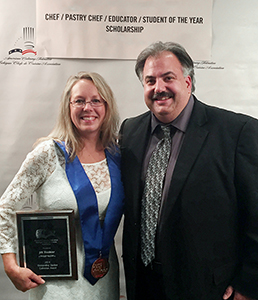 A student and an instructor from Baker College of Port Huron Culinary Institute of Michigan (CIM) have each received a major award from the Michigan Chefs de Cuisine Association (MCCA), a chapter of the American Culinary Federation (ACF) serving the southeastern part of the state.
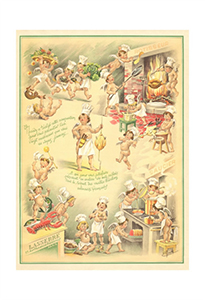 The Culinary Institute of America has partnered with Cool Culinaria to bring the CIA’s extensive collection of more than 30,000 menus to new audiences in the form of archival prints, notecards, coasters, mugs, tea towels, placemats and other products.