
The Gold Standard: A Classroom Without Walls
03 December 2025Connecting learning to life through collaboration, creativity and community connection.
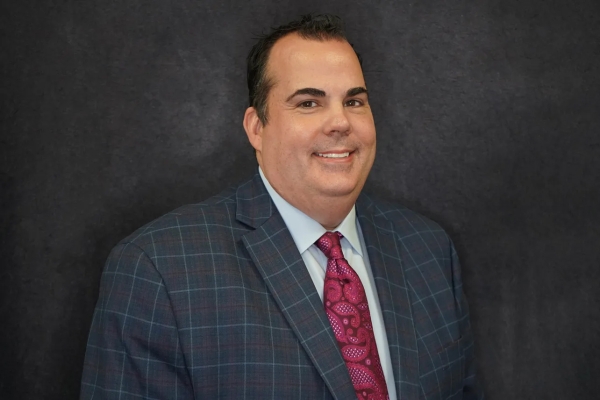
By Chef Phil Cropper, Worcester Couty Public Schools
Director of the Culinary & Pastry Arts and creator of The Pines Café
Feedback & comments: This email address is being protected from spambots. You need JavaScript enabled to view it.
In today’s rapidly changing educational landscape, the best teachers are no longer confined by four walls—they are innovators and visionaries who redefine how learning connects to life.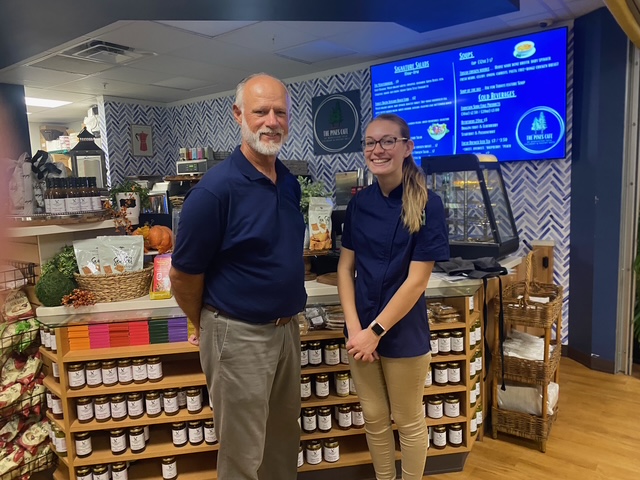
The world of education is changing. If we want to prepare students for the future, we must think beyond textbooks and classrooms. We have to connect learning to purpose, people and place.
A classroom without walls
The story of The Pines Café is more than a culinary success; it’s a blueprint for modern education.
By merging academic rigor, industry standards and human connection, my students and I have created something extraordinary: a model that nourishes both skill and spirit.
As I often say: When learning happens in real time, with real people, and real purpose, that’s when it sticks. That’s when it transforms.
And that’s what makes The Pines Café and Worcester Tech’s “Classroom Without Walls” the true gold standard in culinary education.
 From classroom to Café
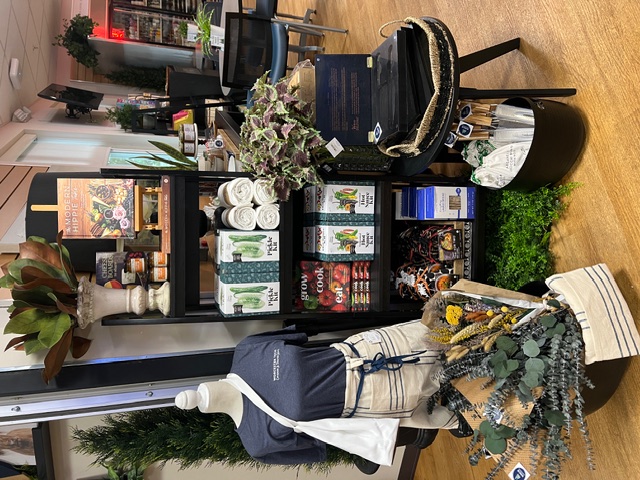
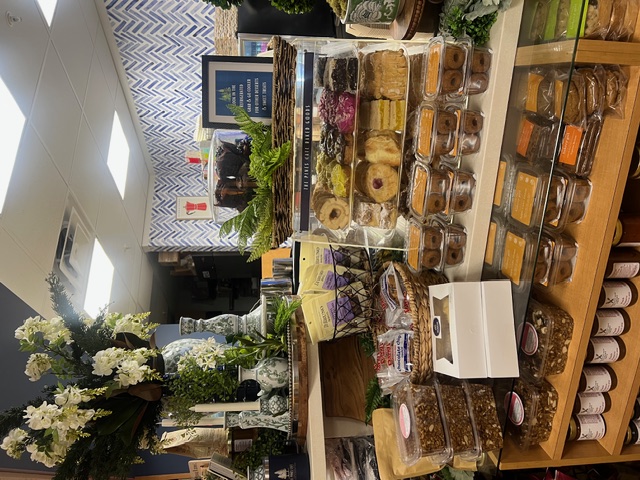
The Pines Café operates as a hybrid concept, a blend of Panera’s comfort and Harry & David’s market sophistication. Its shelves overflow with over 89 student-crafted products: freshly roasted and blended coffees, jams, jellies, and relishes; pickled vegetables, spice blends, dressings, and marinades; and locally made artisan gifts.
The Café also sells imported specialty foods, cookbooks, wooden bowls, juicers, and honey and cheeses from Maryland farms. Customers can sip espresso, enjoy pastries, or grab one of more than 200 take-home meals prepared weekly in the school’s commercial kitchen delivered via the refrigerated van purchased through Café profits.
Our Café showcases every program of study under one roof. Marketing students handle branding, carpentry built our displays, engineering students design the laser-engraved products and culinary students craft the food. It’s the ultimate example of transdisciplinary, hands-on learning.
A partnership that heals and teaches
When TidalHealth agreed to house The Pines Café inside its healthcare complex, it wasn’t just a business partnership it was a community alliance.
Hospital staff, patients and visitors enjoy fresh, nutritious meals prepared and served by students. In return, learners gain exposure to healthcare, hospitality, and the professional expectations of real-world service environments.
The partnership with TidalHealth is transformative. It’s not a simulation - our students are serving real people every day. They see empathy, teamwork and professionalism in action. It’s the perfect blend of education and community impact.
This collaboration also supports Maryland’s Blueprint for the Future, which mandates that all students graduate “college and career ready” by grade 11 and complete a capstone experience by grade 12. The Café meets that benchmark while integrating the Maryland Youth Apprenticeship and Department of Labor’s HOST Year Option, where seniors transition into paid, full-time apprenticeship work.
CTE isn’t the alternative—it’s the advantage.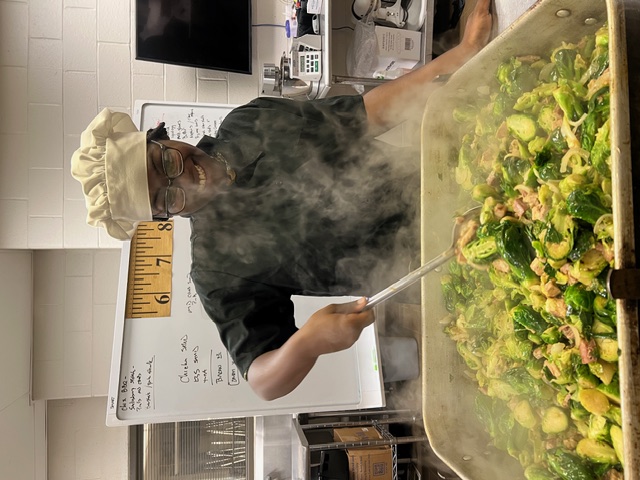
The business of learning
Behind the counter, The Pines Café functions as both classroom and company. Students earn real paychecks through registered apprenticeships, while two full-time adult mentors oversee operations. A full-time “grow-your-own” graduate now works year-round as a culinary assistant.
Revenue from the Café funds student wages, mentor salaries and program reinvestment. The school’s commercial kitchen acts as a commissary, allowing the culinary program to serve as both production hub and instructional laboratory.
Together, The Pines Café, the Marlin Marketplace school store, and the school’s banquet ballroom generated over $500,000 in revenue in their first full school year.
Every transaction is a learning opportunity. Students handle costing, production, marketing, and service everything that makes a business run. They see firsthand how effort and quality translate to value.
Cultivating more than crops
Behind the school sits a 21-bed community garden and bee apiary, built through grants and donations. The garden’s construction was led by Worcester Tech’s carpentry program, with horticulture, agriculture and environmental science students contributing to design and planting.
It’s more than a garden; it’s a schoolwide learning ecosystem. Culinary students use the harvest in Café meals; marketing and business students develop product branding; and digital design students create packaging. Faculty and staff across departments volunteer to maintain the garden, making it a truly transdisciplinary effort that unites the entire campus in sustainability and shared purpose.
We’ve built an ecosystem of learning. Students grow basil that becomes salad dressings, kale that’s used in our take-home meals and honey that sweetens our pastries. It’s farm-to-table meets classroom-to-career.
Student voices from the Café
The greatest testament to the program’s success comes from its apprentices themselves.
“I started with Chef Cropper two years ago in Intro to Culinary,” recalls Nick Zlotorzynski, now a graduate and Maryland’s ProStart Student of the Year. “I helped design the Café concept and became a registered apprentice my senior year. I made money, learned real skills and grew out of my shyness. It changed my life.”
William Meehan, another Café apprentice, adds: “Working at The Pines Café taught me how to manage customers, deadlines and responsibility. When a guest thanks you for something you made, you realize this isn’t just class—it’s your career beginning.”
Their reflections mirror the Science of Learning principle that knowledge deepens when it’s applied in authentic, meaningful contexts.
Grounded in the science of learning and the 5D model
While The Pines Café is a showcase of culinary skill and entrepreneurship, it is equally a model of instructional design grounded in educational research.
Drawing from “The Science of Learning: 99 Studies That Every Teacher Needs to Know” by Edward Watson and Bradley Busch and “How Learning Happens” by Paul Kirschner and Carl Hendrick, I have intentionally structured the Café experience around the 5D Instructional Framework. A system that emphasizes Purpose, Student Engagement, Curriculum & Pedagogy, Assessment for Learning, and Classroom Environment & Culture.
- Purpose – Every activity connects to CTE, ACFEF, or ProStart standards, giving students clarity and direction.
- Student Engagement – Students lead production, sales, and management—active, not passive, participants.
- Curriculum & Pedagogy – Theory and practice intertwine; lessons on sanitation, costing, and management happen in real time.
- Assessment for Learning – Customer feedback, sales metrics, and self-reflections act as ongoing formative assessments.
- Environment & Culture – The Café cultivates professionalism, teamwork, and a sense of belonging.
 When students see their learning come to life—when they’re accountable to real customers—it activates everything the research tells us about motivation and memory.
These practices reflect Watson and Busch’s finding that learning sticks when it is effortful, meaningful and connected to real tasks and Kirschner and Hendrick’s assertion that authentic contexts create durable knowledge.
SkillsUSA and the power of leadership
Beyond the Café, students are active members of SkillsUSA, the nation’s largest organization for career and technical student leadership. I serve on the Maryland SkillsUSA Board of Directors. The organization emphasizes that technical excellence must pair with leadership and character.
Our students don’t just learn to cook. They learn to lead.
Each year, Worcester Tech students compete in SkillsUSA Culinary Arts, Commercial Baking and Restaurant Service, as well as ProStart Invitational events. These experiences build resilience, adaptability, and confidence.
Winning medals is great, but the real reward is watching students realize they belong in this industry.
The gold standard of career education
Every aspect of The Pines Café aligns with CTE, ACFEF and ProStart standards, ensuring students not only meet but exceed industry benchmarks:
|
Framework |
Alignment |
|
Maryland CTE Standards |
Entrepreneurship, Food Systems, and Hospitality Management |
|
ACFEF Accreditation |
Sanitation, Cost Control, Nutrition, Baking & Pastry |
|
ProStart Curriculum |
Customer Service, Culinary Arts Foundations, Management |
|
Youth Apprenticeship |
Paid, supervised, credential-linked work experience |
Graduates leave with ServSafe Manager, ACF Certified Fundamentals Cook (CFC) or Certified Fundamentals Pastry Cook (CFPC), alongside hundreds of paid apprenticeship hours.
Evolving education for a new era
I believe adaptability is essential in an era where education must keep pace with innovation.
We can’t teach tomorrow’s students with yesterday’s methods. Education must be relevant, purposeful and connected to the world outside our doors.
At Worcester Tech, that mindset powers every initiative—from hydroponic greens in the classroom to honey jars on Café shelves. Each reflects 21st-century learning built on collaboration, creativity and community connection.
References:
- Watson, E., & Busch, B. (2019). The Science of Learning: 99 Studies That Every Teacher Needs to Know. Routledge.
- Kirschner, P., & Hendrick, C. (2020). How Learning Happens: Seminal Works in Educational Psychology and What They Mean in Practice. Routledge.
- University of Washington Center for Educational Leadership. (2018). The 5D+™ Teacher Evaluation Rubric and Instructional Framework.
Click here for a GMC story detailing Phil Cropper's 2025 Educator of the Year Award presented by CAFE and the Idaho Potato Commission.