
Specialty-Food Sales Top $100 Billion for First Time
Wednesday, 29 April 2015 03:00
 The 10 best-selling categories have shifted since just 2013, and today, cheese is still tops, but refrigerated pasta, functional beverages and nut and seed butters show big gains. Why should we care? Because foodservice is an increasingly important sector to that industry, with growth of nearly 31% since 2012.
The specialty-food industry is a bright spot in the U.S. economy. In 2014, sales of specialty food topped $100 billion for the first time, with retail and foodservice sales reaching a record $109 billion.
Retail sales of specialty-food sales grew 19% from 2012 to 2014 versus a tepid 2% increase for all food. The industry, fueled by small businesses, now boasts 15 segments that exceed $1 billion in sales, including cheese; coffee; meat, poultry and seafood; chips, pretzels and snacks; candy; and yogurt.
These findings are from a new report from the Specialty Food Association produced in conjunction with research firms Mintel International and SPINS/IRI. The report, “The State of the Specialty Food Industry 2015,” tracks U.S. sales of specialty food through supermarkets, natural-food stores, specialty-food retailers and foodservice venues. Specialty foods are broadly defined for the report as products that have limited distribution and a reputation for high quality.
 Hot sauce is becoming ubiquitous in homes and at foodservice outlets, according to recent NPD Group research. And while the classic Louisiana type still rules, it’s by far not the only hot seller, evidenced by spreading-like-wildfire sales of fruity habanero and chipotle varieties.
 Serving a term of 18 months, Carroll is joined by John Sloane of Macau as vice president of the global organization serving 10 million chefs from more than 105 nations.
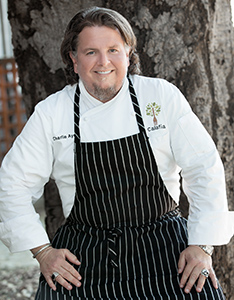 Chef Charlie Ayers and other celebrity chefs support Earth Day San Francisco in honor of Earth Month.
 Say a menu item doesn’t sell. Is it overpriced, poorly described, not satisfying to the customer or a combination of these? To understand the basics of restaurant-performance management systems, here are three key teachings that would be part of any 101-level course on the topic.
 The third installment in a series on effective professional-development activities performed by students outside of the classroom.
 Graduates will not remember many specifics of their educations, and will even realize that so much they thought would be important to their life paths isn’t. But they will remember those who influenced their learning in meaningful ways.
 With the addition of Master of Wine Adam Lapierre (pictured) to the team and three brand new programs to the schedule, San Francisco Wine School now boasts top-level educators from, and coursework for, all four major wine credentialing bodies. The school’s elite group now comprises three Master Sommeliers (Court of Master Sommeliers), three with Diplomas in Wine & Spirits (Wine & Spirits Education Trust), three Certified Wine Educators (Society of Wine Educators) and one Master of Wine (Institute of Masters of Wine). This guarantees that, no matter which educational path wine students choose, they will be fully supported by San Francisco Wine School.
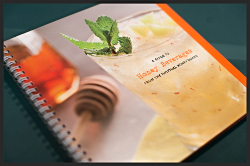 The National Honey Board (NHB) has introduced a colorful, eye-catching, new, information-rich resource, A Guide to Honey Beverages. Serving as a complement to the Sweet Stirrings cocktail guide (2012), the honey beverage handbook features nearly 40 spiral-bound, laminated pages replete with honey tips, tricks and on-trend recipes to help operators enhance their non-alcoholic and alcoholic beverage menus and programs.