
FoodChannel.com Announces Top 10 Dessert Trends for 2014
Saturday, 01 March 2014 03:00
 Hand pies are the latest incarnation in the mini-dessert trend, crêpes add adventure to diners’ repertoires, and nuts, dessert butters and spoonables are big.
The Food Channel® (foodchannel.com) in February released its “Top Ten Dessert Trends for 2014,”sponsored by Otis Spunkmeyer®. The popular annual report looks at market trends around sweets and treats. Based on research conducted in conjunction with CultureWaves®, the list identifies the significant behaviors of consumers, foodservice professionals and manufacturers, with original recipes and photographs to illustrate each trend.
The Food Channel Top 10 Dessert Trends for 2014 are:
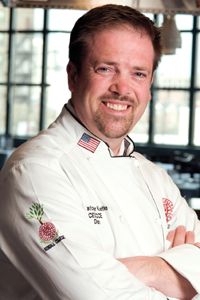 A simple concept conceived by the School of Culinary Arts at Kendall College turned out to be a powerful tool with which to teach culinary-arts students how to achieve impeccable flavor in every dish.
 CAFÉ’s second-annual Deans and Directors Retreat in February introduced a stellar line-up of thought leaders to passionate educators wishing to grow and strengthen their culinary-arts programs amid sweeping societal evolution.
 Incorporating sustainability and social-responsibility elements into an operator’s business is no longer a “nice to have,” according to Technomic, as Americans increasingly demand that foodservice become more responsible and transparent.
 Career technical education (CTE) programs such as the National Restaurant Association Educational Foundation’s ProStart give students the skills and experience they need to achieve rewarding, long-term careers in the high-growth restaurant sector.
 In the culinary world, learning the “how” and its many variations is a critical part of students’ education. One way to teach curiosity is to capitalize on the five “W”s.
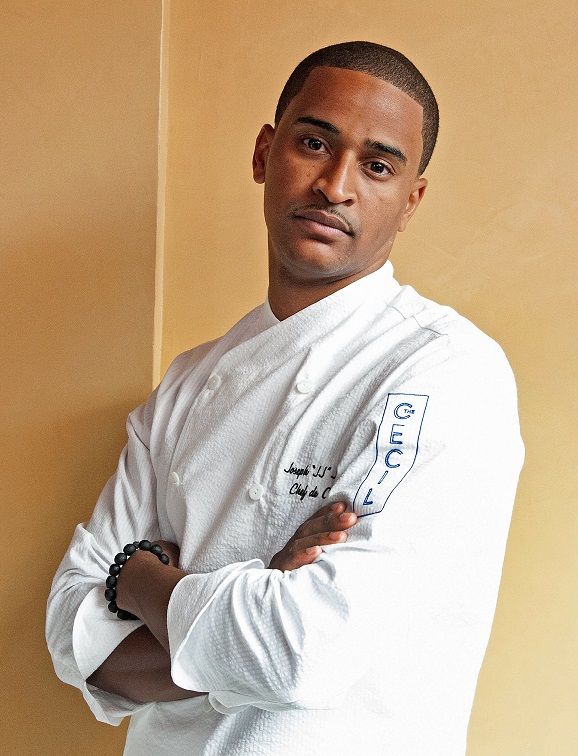 The January 20, 2014, issue of Forbes magazine honored the best up-and-comers in a wide range of fields. In its annual “30 Under 30” list, four graduates of The Culinary Institute of America (CIA) were named in the area of food and beverage. That’s more than any other college or university.
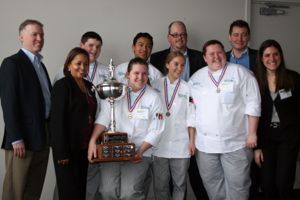 A sea bass, a chicken and a mousse—that’s the menu that sealed the third straight ProStart state championship for the culinary team from Technology Center of DuPage (TCD) in Addison, Ill. The team competed Feb. 8 at the 13th Annual Illinois ProStart® Student Invitational for high-school culinarians, hosted by the Illinois Restaurant Association Educational Foundation (IRAEF) at Kendall College in Chicago.
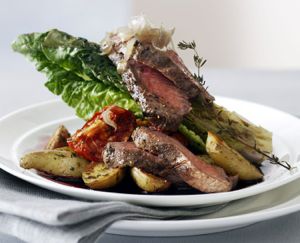 Beef University boosts beef knowledge of educators and students.