
Kendall College Welcomes Yancey to Adjunct Culinary Faculty
Tuesday, 07 October 2014 13:53
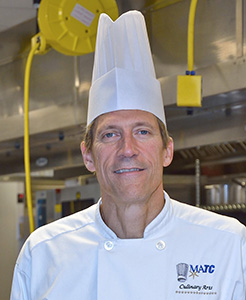
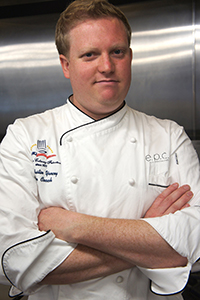 The Kendall CollegeSchool of Culinary Arts announces the addition of Austin Yancey, CEC, CCE, PCEC, to its adjunct faculty. A lauded chef and educator, Yancey will be teaching Nutritional Cooking and one of Kendall’s Culinary Certificate courses.
“Kendall College proudly welcomes Chef Yancey to our teaching family,” says Renee Zonka, RD, CEC, CHE, MBA, dean of the school. “Chef Yancey’s wealth of experience and achievement in culinary instruction, professional cooking and formal competition on the global stage—combined with his effusive reach-for-the-stars philosophy and attitude—will continue to advance Kendall College’s distinction as an international leader in culinary education.”
Most recently a culinary-arts instructor at Le Cordon Bleu College of Culinary Arts in Chicago, Yancey discovered his love of and passion for cooking as a young boy working alongside his grandmother in her Greenville, S.C., kitchen. There, she introduced Yancey to the wholesomeness and pronounced flavors of naturally raised and harvested ingredients years before farm-to-table cooking and eating became the American ideal.
A graduate of Le Cordon Bleu, Yancey started his culinary journey at Caliterra (since closed), the Saddle & Cycle Club and the Zurich Skyline Suite at Soldier Field.
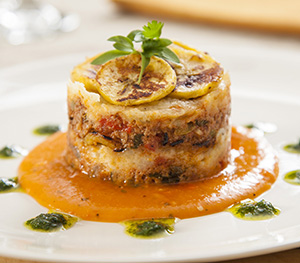 Entries in the 2014 Discover Duck Recipe Contest proved that the possibilities with duck are boundless. Concepts ranging from Latin-influenced entrées to decadent desserts and upscale state-fair favorites captured the attention of judges who awarded more than $19,000 in cash and prizes. Sponsored by Maple Leaf Farms, the annual contest challenged professional chefs and culinary students to produce original recipes showcasing Maple Leaf Farms duck. More than 260 recipes from across the country were submitted.
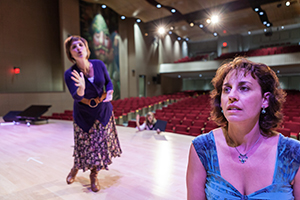 The Culinary Institute of America and Half Moon Theatre, the Hudson Valley’s leading year-round professional theatre company, recently announced a new partnership that will bring New York-style theatrical performances to the Hyde Park campus. The CIA’s new 800-seat, state-of-the-art Ecolab Auditorium in the Marriott Pavilion makes it possible for visitors to enjoy a meal in either the The Bocuse Restaurant, American Bounty or Ristorante Caterina de’ Medici prior to experiencing one of Half Moon Theatre’s productions.
 On its 80th anniversary, Kendall College’s president envisions a future in which everyone worldwide with a passion for food may pursue their dreams to cook professionally.
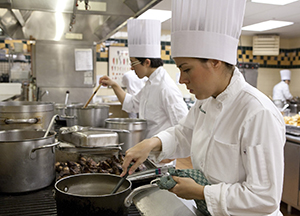 A new degree is designed to prepare graduates to influence the future of food.
 This second in a two-part series on teaching culinary arts through ratios in practical culinary labs focuses on incorporating ratios into your lesson plan.
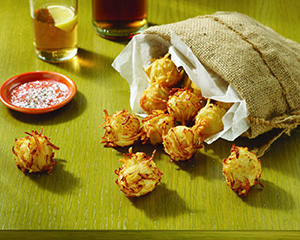 As Tater Tots® hit the Big 60, the Idaho Potato Commission celebrates six decades of tot-inspired menu creativity.
 This second installment in a four-part series on assessment methods focuses on oral presentations and class participation.