Alberta Program Serves up Success for Job Seekers
Wednesday, 23 September 2015 12:21A pilot project in Canada supports vulnerable members of the community who seek stable jobs in foodservice.

A pilot project in Canada supports vulnerable members of the community who seek stable jobs in foodservice.

Three educators earned recognition and professional development for unleashing creativity in the culinary classroom at the 11th-annual CAFÉ Leadership Conference
The Idaho Potato Commission (IPC) recognized secondary and postsecondary educators with the 2015 Idaho Potato Commission Innovation Awards at the 11th-annual Leadership Conference of the Center for the Advancement of Foodservice Education (CAFÉ) in Niagara Falls, N.Y., in June.
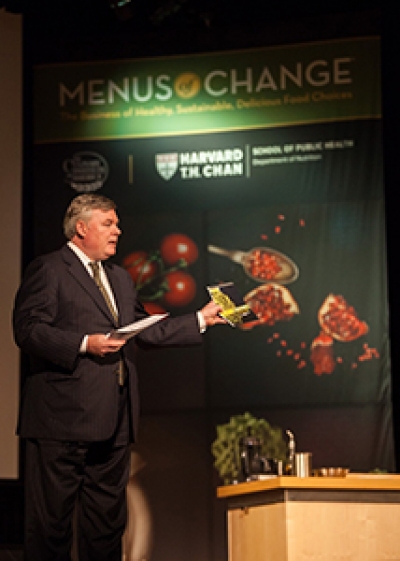
According to the CIA-Harvard 2015 Menus of Change Annual Report, innovation and plant-forward menus are on the rise, but so are consumer confusion and climate and water impacts.
The 2015 Menus of Change Annual Report was released at the 3rd Annual Menus of Change® Leadership Summit, held for the first time at the Hyde Park, N.Y., campus of The Culinary Institute of America, which presents the initiative in partnership with Harvard T. H. Chan School of Public Health.

To fully harness the power of restaurant information, operators must first identify where they are on the learning curve and then plot a course to progress along it. While most operators aren’t behind the curve compared to their competition just yet, the landscape is changing, and playing offense is better than defense.

The North American Olive Oil Association launches a consumer initiative to boost the comparatively low—but greatly improved—per-capita U.S. consumption of 1 liter of olive oil per year.